What Helps Post-Viral Fatigue — and What Often Slows Recovery
- New Pathways Programme
- Jan 29
- 4 min read
Updated: Apr 13

If you’re asking what helps post-viral fatigue, you’re probably in a frustrating in-between place.
The virus has gone — but you don’t feel better. You’re exhausted more easily than before. Your thinking feels slower. And you may be wondering whether this is still “normal recovery” or the start of something longer-lasting.
This guide explains what actually helps post-viral fatigue, what often unintentionally slows recovery, and how to support your body back toward steadier energy — without panic, pushing, or false reassurance.
Quick answer: what helps post-viral fatigue
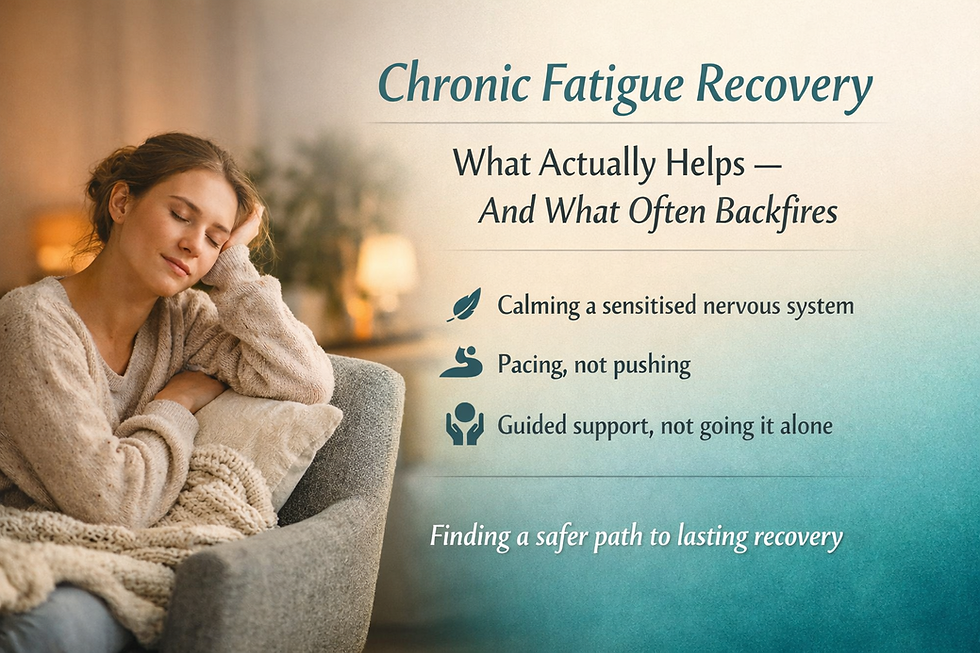
Post-viral fatigue improves most reliably when the body is supported back into a state of safety and regulation — not when people push through or rest indefinitely.
What helps most people is:
stabilising the nervous system after illness
reducing post-exertional crashes
avoiding repeated boom-and-bust cycles
gently rebuilding tolerance only once symptoms settle
Early patterns matter more than labels. When recovery is supported calmly and consistently, many people improve — even if progress feels slower than expected at first.
This guide reflects the same clinical approach I use in the New Pathways Programme, supporting adults, teens and families with post-viral fatigue and related conditions.
👉 Learn more about the programme here: /new-pathways-programme
“I thought I’d recover by now” — normalising the confusion
People searching what helps post-viral fatigue often say things like:
“I thought I’d recover by now.”
“My virus has gone but I still feel wiped out.”
“Doctors say it just takes time — but how long?”
“I’m scared of this turning into chronic fatigue.”
This uncertainty is incredibly common — especially when blood tests are normal but day-to-day life still feels limited.
👉 If this sounds familiar, this may help: /post/fatigue-but-normal-blood-tests
You’re not weak, broken, or failing recovery. In many cases, the body is simply struggling to switch fully out of its protective post-illness mode.
What actually helps post-viral fatigue
Supporting recovery without forcing it
Post-viral fatigue isn’t about low motivation or lost fitness. It’s often about a nervous system that’s still cautious after illness.
What tends to help most consistently includes:
1. Regulating stress responses after illness
Illness can sensitise the nervous system. Calm, predictable input helps it stand down from high alert.
2. Avoiding repeated “mini-crashes”
Even small over-efforts can reinforce fatigue patterns if they trigger delayed symptom flare-ups.
👉 If activity causes delayed worsening, read: /post/post-exertional-malaise-pem
3. Reducing constant symptom monitoring
Hyper-focusing on symptoms can unintentionally keep the system on edge.
4. Creating predictable energy use
Short, steady activity blocks with rest before symptoms spike — not after.
5. Reintroducing activity gently, once stable
Progress comes from safe, non-threatening increases, not from pushing through.
This isn’t about “doing nothing”. It’s about doing the right amount, at the right time, in the right state.
What often slows post-viral fatigue recovery
This section matters — because many people are doing these things with the best intentions.
Patterns that commonly keep people stuck
pushing to “get back to normal” too soon
over-resting without helping the system feel safe
boom-and-bust pacing
treating thinking as “free energy”
endlessly searching for the missing test or fix
comparing recovery timelines with others
None of this is your fault. These are very human responses to uncertainty and fear.
But over time, they can reinforce a protective fatigue loop rather than allowing recovery.
How post-viral fatigue can become persistent (without fear)
Why early patterns matter more than labels
After illness, the body may remain in threat physiology:
energy is conserved
effort is treated cautiously
recovery systems stay partially offline
If this state is repeatedly triggered — through crashes, stress, or fear — fatigue can persist longer than expected.
Importantly:
this does not mean damage
it does not mean permanence
it does not mean you’re destined for CFS/ME
What matters most is helping the system relearn safety before these patterns harden.
👉 For more on overlap with long COVID, see: /post/blog-long-covid-fatigue-causes-recovery
Why generic advice often doesn’t help
Many people are told:
“Just rest.”
“Build fitness gradually.”
“Wait it out.”
“Think positively.”
Each contains a grain of truth — but none address the regulation problem at the heart of post-viral fatigue.
You’re not missing will power. You’re missing the right support for the recovery phase you’re in.
Where my clinical experience fits
Since 2007, I’ve supported 700+ adults, teens and families with post-viral fatigue, chronic fatigue patterns and long COVID.
A consistent pattern I see is this:
Recovery accelerates when safety and nervous-system regulation are prioritised early — before people become stuck in cycles of fear, over-correction, or self-doubt.
This is why timing and approach matter far more than labels.
How the New Pathways Programme supports recovery
This is exactly what we focus on inside New Pathways:
calming the nervous system after illness
reducing crash patterns
rebuilding trust in activity
supporting steady, sustainable recovery
👉 Read real-world recovery experiences here: /success-stories
👉 Or learn more about the programme here: /new-pathways-programme
If you’d like to talk things through, you can also:
👉 Book a free health consultation: /book-online
When to seek medical input
It’s important to involve your GP or clinician if you’re experiencing:
new or worsening symptoms
significant weight loss
unexplained pain, neurological symptoms, or breathlessness
fatigue that continues to escalate rather than stabilise
Medical input and nervous-system-led recovery are complementary, not competing.
Common questions
How long does post-viral fatigue last?
It varies. Many people improve gradually over weeks to months, especially with the right support early on.
Can post-viral fatigue turn into chronic fatigue?
It can persist if protective patterns remain unaddressed — but this is not inevitable.
What helps most, overall?
Stability first. Then gradual rebuilding — not pushing, not withdrawing.
Written by Steve Fawdry
Fatigue recovery specialist and creator of the New Pathways Programme, supporting adults, teens and families with post-viral fatigue, Long COVID and chronic fatigue-type symptoms.